Last updated: September 2026
The honest answer to how to get rid of acne scars fast is that indented and raised scars do not fade on their own. They improve with in-clinic treatment such as fractional laser, microneedling, and chemical peels, usually over several sessions.
Flat brown or red marks left after a breakout are a different story, and many fade with time and daily sun protection. The first job of acne scar treatment is telling the two apart, because the right plan for one does little for the other.
Scar or Mark? How to Tell the Difference
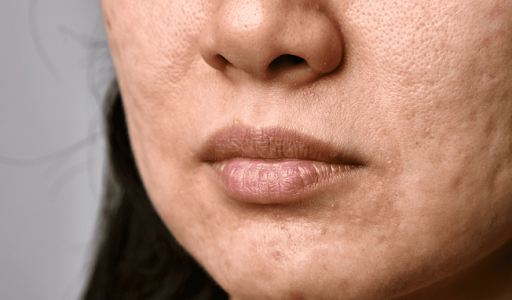
Run a finger over the area under side lighting. If the skin is flat and only the color has changed, you are most likely looking at post-inflammatory marks, which sit in the top layers of skin; if the surface dips or rises, collagen has been lost or overproduced, and that is a true scar.
Dermatologists group true acne scars into a few types. Knowing yours narrows the options quickly.
- Ice pick scars: narrow, deep holes that look like large open pores.
- Boxcar scars. Wider, with sharp edges and a flat base.
- Rolling scars, which give the skin a wave-like surface because bands under the skin pull it down.
- Raised scars. Hypertrophic scars and keloids are firm and lumpy, and they appear more often on the chest, back, and jawline.
Scarring is common. Effective treatment of active acne is a way to limit scarring, so treating breakouts now is part of treating scars later.
How to Get Rid of Acne Scars at Home: What Home Care Can and Cannot Do
Home care can fade marks and protect results, but it cannot lift an indented scar. Here is where it earns its place.
- Daily broad-spectrum sunscreen. UV darkens marks and makes scars stand out against the skin around them.
- A retinoid your doctor recommends, which speeds up skin turnover so flat marks fade sooner.
- Hands off. Picking and squeezing turns a spot that would have healed into a scar.
Searches for how to get rid of acne scars naturally tend to turn up lemon juice, honey, or aloe vera. None of them can rebuild lost collagen, and acidic kitchen remedies can irritate skin and leave new dark patches.
At-home microneedling rollers carry a real risk of infection and more marking. Leave them in the shop.
Treatments That Work, Matched to Scar Type
No single treatment suits every scar, and most people have more than one type. Plans often combine two or three.
| Scar type | Treatments that usually help |
|---|---|
| Ice pick | Focal high-strength chemical peel, fractional laser |
| Boxcar | Fractional laser, RF microneedling, microneedling |
| Rolling | Subcision, RF microneedling, filler for deeper dips |
| Hypertrophic and keloid | Steroid injections, silicone, laser in selected cases |
| Flat red or brown marks | Sun protection, retinoids, chemical peels, pigment or vascular laser |
At Yoland, the options discussed most often are laser acne scar treatment, RF microneedling, and chemical peels, chosen once the scar types have been named.
Fractional Laser
A fractional laser treats the skin in tiny columns, leaving healthy skin between them, and the healing response lays down new collagen. It works well on boxcar and shallow scars, and a few days of redness afterward is typical.
RF Microneedling
Fine needles deliver radiofrequency heat below the surface, where rolling and boxcar scars are anchored. Because the heat sits deeper, it is often a good fit for darker skin types.
Chemical Peels
Peels resurface the top layers of skin, which helps with marks and shallow texture. A focal, high-strength peel placed inside individual ice pick scars is one of the few treatments that reaches their narrow base.
Forehead, Cheeks or Back: Does Location Change the Plan?
Search “how to get rid of acne scars on forehead,” and you will find much the same advice as for the cheeks. The forehead sits close to bone with thin skin over it, so settings are chosen with care, and boxcar and ice pick scars there respond well to laser and peels.
If you are working out how to get rid of back acne scars, expect a longer plan. Skin on the back is thicker and heals more slowly, raised scars are more likely there, and larger areas take more sessions to cover.
How Long Does Acne Scar Treatment Take? Months, Not Weeks
Many plans run to 3 to 5 sessions spaced 4 to 6 weeks apart, and collagen keeps remodeling for months after the last one. The change is gradual: expect a softer, more even surface rather than skin that looks untouched.
Your Acne Scar Consultation: Naming the Scars First
A dermatologist examines the scars under good lighting, names each type, and checks for active acne. You leave with a plan that sets out the treatments, the sessions, and the price in writing.
Simple plans can start the same day. Otherwise, you have time to decide.
When to Wait Before Treating Acne Scars
Scar treatment gives better results on skin that is no longer breaking out, so active acne comes first. New spots during a scar course can undo progress and leave fresh marks.
- You are taking or have recently finished isotretinoin. Tell your dermatologist, who will advise on timing for lasers and deeper peels.
- You form keloids easily, because some treatments can trigger new raised scars and the plan has to change.
- You have darker skin and have had dark marks after treatments before. Settings and treatment choice matter more, and a test area may be suggested.
- You expect no trace of scarring at all. Treatment softens scars; it does not erase them.
None of these rule treatment out for good. They change the order, the timing, or the method.
Where to Start: Name the Scar, Then Treat It
If you cannot tell whether you are looking at a scar or a mark, message us on WhatsApp at +971 55 608 0406 or call 04 288 3800. You can also email info@yoland.ae or describe the scars that bother you through our form. A dermatologist will name the scar types first and put the plan and price in writing.
Acne Scar Questions, Answered
Does insurance cover acne scar treatment?
Usually not, because insurers tend to classify scar treatment as cosmetic. Treatment of active acne is more often covered, so ask the front desk to check your policy.
Will scars come back after treatment?
Treated scars do not usually return. New breakouts can cause new scars, so keeping active acne under control protects the result.
Does acne scar treatment hurt?
It is uncomfortable rather than painful for most people. Numbing cream is usually applied before microneedling and laser, and the sensation is often described as heat or prickling.
Do I need a consultation before booking a scar treatment?
Yes. A dermatologist needs to name the scar types and check for active acne before choosing a treatment, and that visit is where your plan and price are set out in writing.
How many sessions will I need?
It depends on your scar types, how deep they are, and your skin type. Acne scars usually need a course of sessions rather than one, and your dermatologist sets out the number in your treatment plan.