

Non-Surgical Facial Lifting in Dubai
Restoring Firmness and Definition Without Surgery or Downtime
- Skin Condition
- Nail Condition
- Hair & Scalp
- Minor Procedures
- Botox
- Dermal Fillers
- Mesotherapy
- Skin Booster
- PRP Treatment
- Fat-Dissolving Injection
- Non-Surgical Facial Lifting
- Collagen Biostimulator
- Microneedling
- Scar & Acne Scar
- Cellulite Treatment
- Laser Hair Removal
- Carbon Laser Facial
- Laser Pigmentation
- Laser Acne Scar
- Redness & Vascular
- Tattoo Removal
- Skin Tag Removal
- Deep Cleansing Facials
- Chemical Peels
- Enlarged Pore Treatments
- Skin Brightening
- Stretch Mark Treatment
- RF Microneedling
What Is Non-Surgical Facial Lifting And How Does It Work?
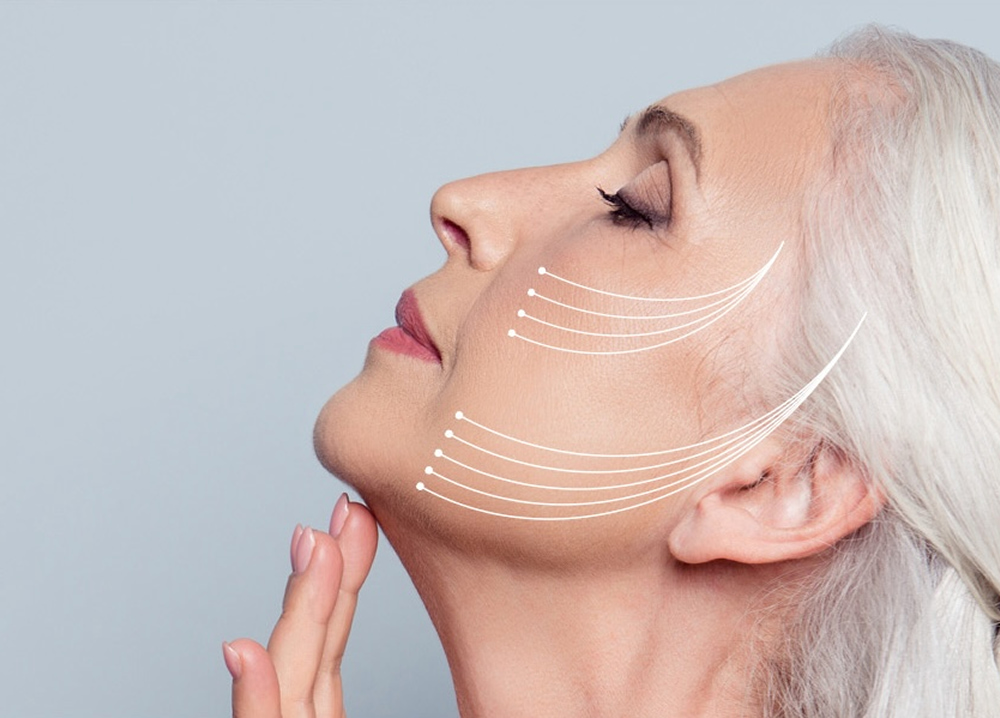
Non-surgical facial lifting is a group of treatments that restore firmness, improve contour and lift descending facial features without incisions, general anaesthetic or extended recovery. It addresses the same visible changes a surgical facelift targets: a softening jawline, flattening cheeks, deepening folds and loosening skin through different means.
The face ages in layers, and this matters for choosing the right approach. Skin loses collagen and elasticity, so it thins and slackens. The fat compartments beneath lose volume and descend, so cheeks flatten and the jawline blurs. The supporting ligaments weaken, allowing tissue to move downward. Bone itself remodels over time, reducing the underlying framework. A treatment that addresses only one of these layers produces a limited result.
Non-surgical lifting therefore works by rebuilding support at the layer where support has been lost — stimulating new collagen to firm the skin, restoring structural volume where it has descended, and tightening tissue to lift the contour. Because it is stimulating your own tissue rather than cutting and repositioning it, results develop gradually across weeks and months, and the outcome is a refreshed version of your own face rather than a changed one.
Non-surgical lifting is not a replacement for a surgical facelift. Where laxity is significant, surgery achieves more, and our doctors will tell you honestly if that is the case rather than selling you a course of treatments that will disappoint.
Facial Lifting Treatment Areas At Yoland Clinic
Our doctors treat the following areas at our Nadd Al Hamar clinic:
Jawline & Jowls
A softening jawline is the change patients most often notice first. Treatment restores definition along the mandibular border and lifts early jowls, sharpening the transition between face and neck. This area responds particularly well to combined structural support and tissue tightening.
Mid-Face & Cheeks
As the cheek fat compartments lose volume and descend, the mid-face flattens and the area beneath the eye hollows. Restoring support here lifts the whole lower face, because much of what appears as sagging around the mouth originates higher up.
Nasolabial Folds & Marionette Lines
The folds running from nose to mouth, and from the corners of the mouth downward, deepen as mid-face support is lost. Treating them at the source, restoring the support above usually produces a more natural result than filling the fold directly.
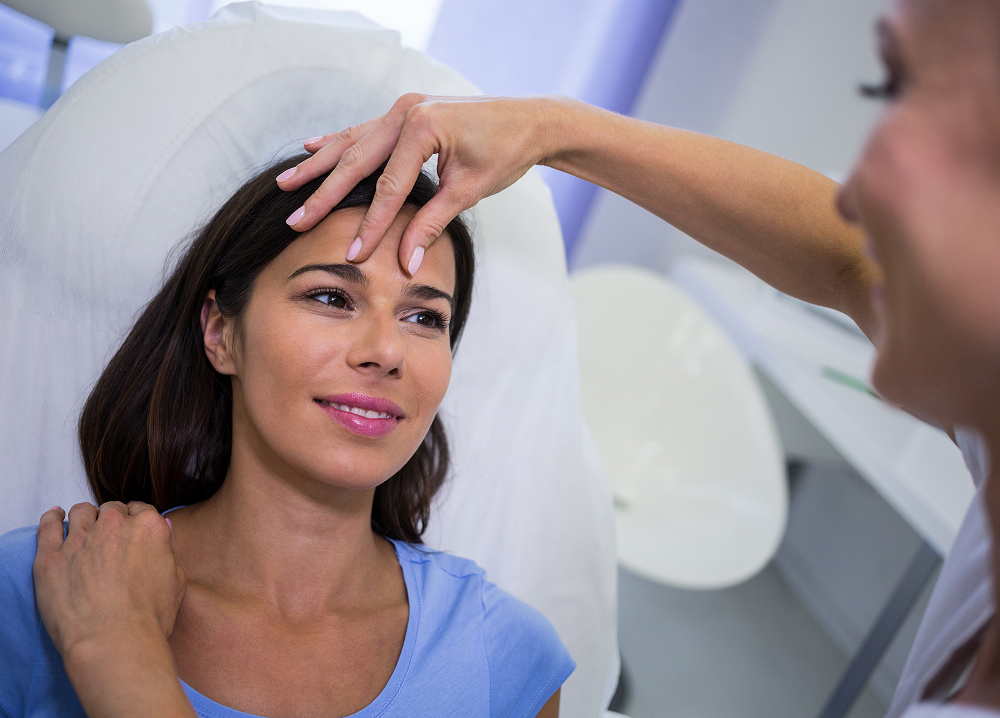
Brow & Upper Face
A descending brow makes the eyes look heavier and the expression more tired. Lifting the brow area opens the eye and refreshes the upper face, and is often the change that makes the biggest difference to how rested someone looks.
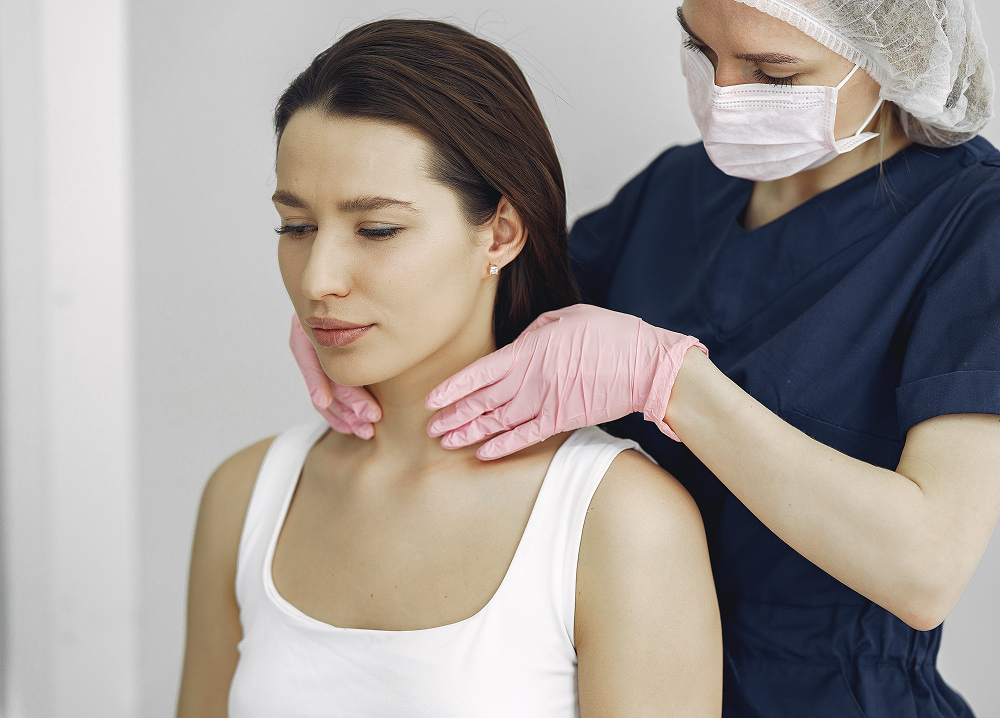
Neck & Under-Chin
Laxity beneath the chin and along the neck is treated to improve definition and smooth horizontal banding, restoring the separation between jaw and neck that softens with age.
Temples
Hollowing at the temples narrows the upper face and pulls the outer brow downward. Restoring volume here widens the upper third and provides support that lifts the outer eye area.
Overall Facial Contour
For many patients, the concern is not a single feature but a general loss of firmness. A full-face plan addresses several areas in sequence, restoring proportion rather than treating one region in isolation.
Collagen Stimulation For Lifting
The first approach works by prompting your skin to rebuild its own collagen. Collagen biostimulators and microneedling both trigger the skin’s repair response in a controlled way, and the new collagen laid down over the following weeks and months thickens and firms the skin from within.
This is the slowest of the approaches and also the most natural. Nothing is added that changes shape directly — the improvement comes from your own tissue becoming stronger and more elastic. It works particularly well for early laxity and for patients who want gradual change that nobody can point to.
Why Collagen Stimulation at Yoland?
- Results come from your own collagen, developing gradually and naturally
- Improves skin quality and firmness at the same time as contour
- Well suited to early laxity and to prevention
- Combines with every other approach on this page
- Results continue building for months after the final session
Structural Support & Tissue Tightening
The second approach restores support directly. Where volume has been lost or descended, structural support is rebuilt at the deeper level to lift the tissue above it — this is why treating the cheek often improves the fold near the mouth. Where the concern is loose skin rather than lost volume, energy-based tightening contracts existing collagen and stimulates new collagen in the deeper layers.
These approaches deliver more visible lift than collagen stimulation alone, and act faster. They are selected based on which layer is actually driving the appearance you want to change — which is determined at consultation, not chosen from a menu in advance.
Why This Approach at Yoland?
- Addresses descent and laxity directly rather than surface texture
- Visible improvement develops faster than with stimulation alone
- Method matched to the layer causing the concern, after assessment
- Planned by DHA-licensed doctors with facial anatomy training
- Sequenced with collagen stimulation for a longer-lasting result
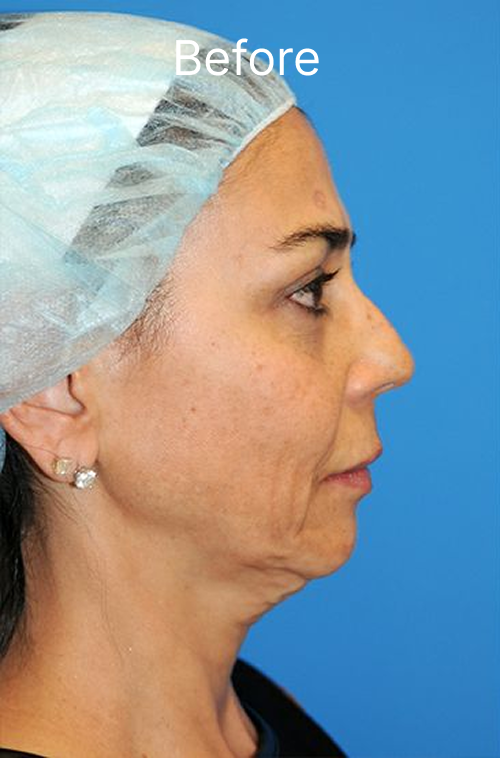
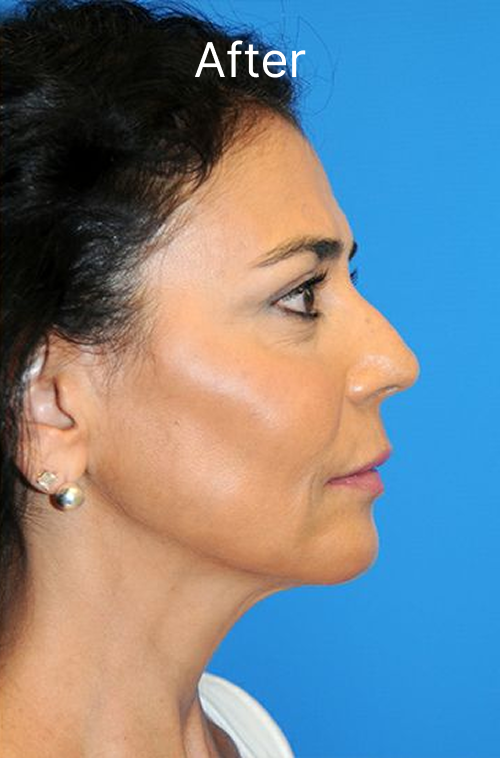
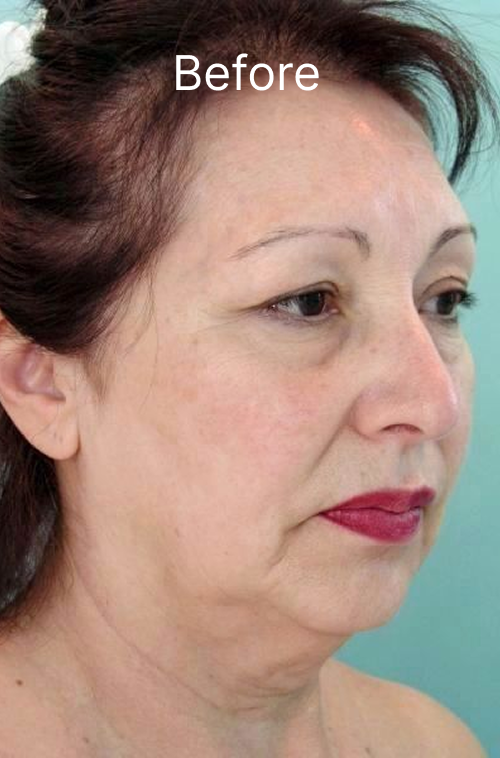
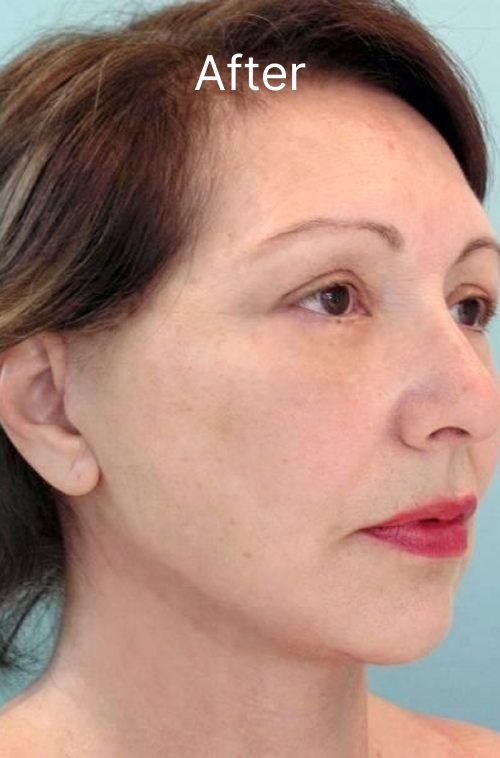
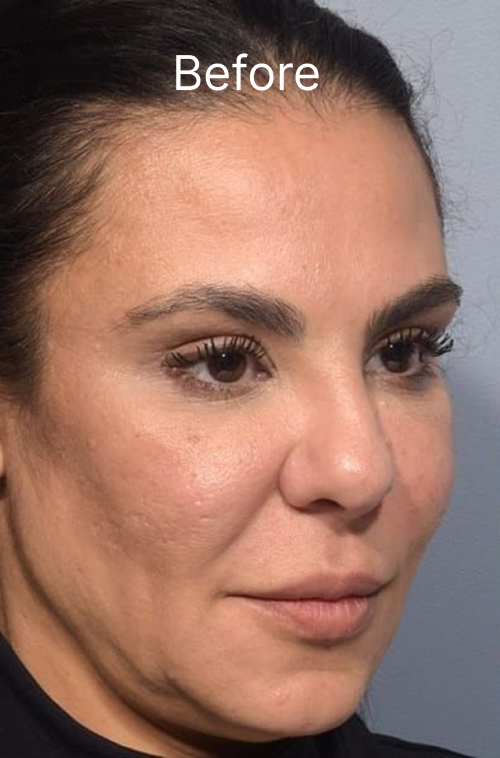
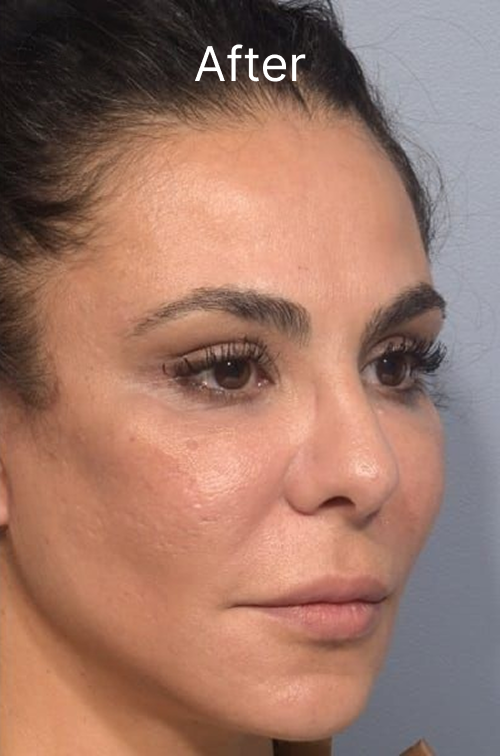
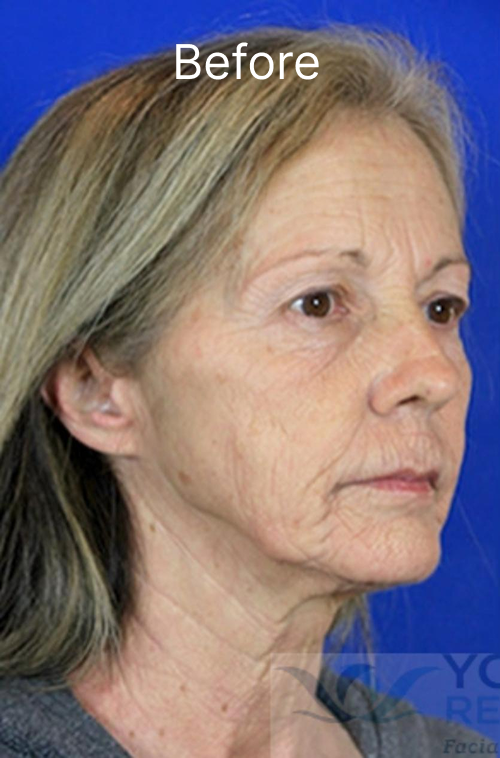
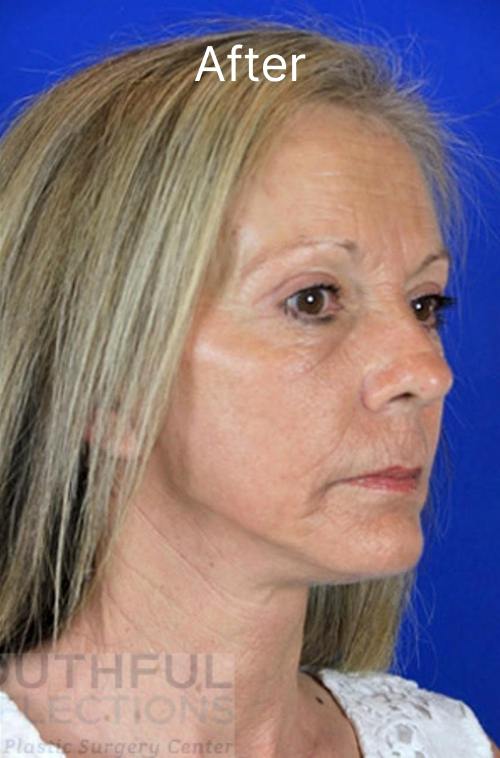
Before and After
See the natural looking results achieved by our experienced specialists.
Understanding What Causes Facial Descent
Choosing the right treatment depends on knowing which layer has changed.

Skin
Collagen and elastin decline, so the skin thins, creases and loses its ability to recoil. This is the layer collagen stimulation targets.

Fat compartments
The distinct pads of facial fat lose volume and shift downward, flattening cheeks and blurring the jawline. Structural support addresses this.

Ligaments
The retaining ligaments that hold facial tissue in position weaken, allowing descent. Tightening treatments work partly at this level.

Bone
The facial skeleton remodels over time, reducing the framework everything above sits on. This is why volume restoration in the right place lifts so effectively.

Why one treatment is rarely enough
Because several layers change at once, most plans combine approaches. A single treatment addressing a single layer produces a partial result.
Facial Lifting Aftercare — What To Do After Your Treatment
Following your treatment at Yoland, please observe the following aftercare guidelines to protect your results:

Remain upright for the period your doctor specifies after treatment

Do not massage or apply pressure to the treated areas unless specifically instructed to
Avoid strenuous exercise, saunas and steam rooms for 24 to 48 hours

Avoid alcohol for 24 hours following treatment

Apply broad-spectrum SPF 50 daily and avoid direct sun exposure

Do not have facial massage or other facial treatments for two weeks

Expect results to develop gradually — allow the full time before judging the outcome

Contact the clinic immediately on 04 288 3800 if you experience any unusual side effects

Facial Lifting Prices In Dubai
We price non-surgical facial lifting by the areas treated and the approach used; your doctor will set out the full sequence and its cost during your consultation. All pricing is provided in writing before any procedure begins; there are no surprise charges at Yoland.
Meet Our Specialist Team
Our DHA-licensed doctors assess which layer of the face has actually changed before recommending treatment — because a plan built on the wrong assumption produces a disappointing result no matter how well it is executed. They will also tell you plainly if your degree of laxity would be better addressed surgically, rather than selling you a course that cannot deliver what you want.
Frequently Asked Questions
Is non-surgical lifting as effective as a face lift?
No, and we would rather say so plainly. A surgical facelift repositions tissue and removes excess skin, achieving more where laxity is significant. Non-surgical lifting works well for mild to moderate laxity and for patients who want gradual, natural change without surgery or downtime. Your doctor will tell you honestly which category you fall into.
When will I see results for a non-surgical face lift?
Non-surgical lifting works gradually. Some approaches show visible change within weeks; collagen-based results build over three to six months as new collagen develops. This is a treatment where patience is required, and judging the result too early is the most common mistake patients make.
What is the difference between this and dermal fillers?
Dermal fillers add volume directly to a specific area. Non-surgical lifting is a broader strategy that may include structural volume restoration but also collagen stimulation and tissue tightening, chosen according to which layer has changed. Fillers can form part of a lifting plan rather than being an alternative to one.
Can I combine it with Botox?
Yes, and the two work on different things — Botox relaxes the muscles that create expression lines, while lifting treatments address structure and firmness. They are frequently used together, and your doctor will sequence them appropriately.
Am I too young or too old for a non-surgical face lift?
There is no fixed age. Younger patients with early laxity often benefit from collagen stimulation as a preventive approach. Older patients with more significant laxity may achieve good results non-surgically or may be better served by surgery. Assessment determines this, not age. DHA regulations require patients to be 18 or older for aesthetic treatment.